
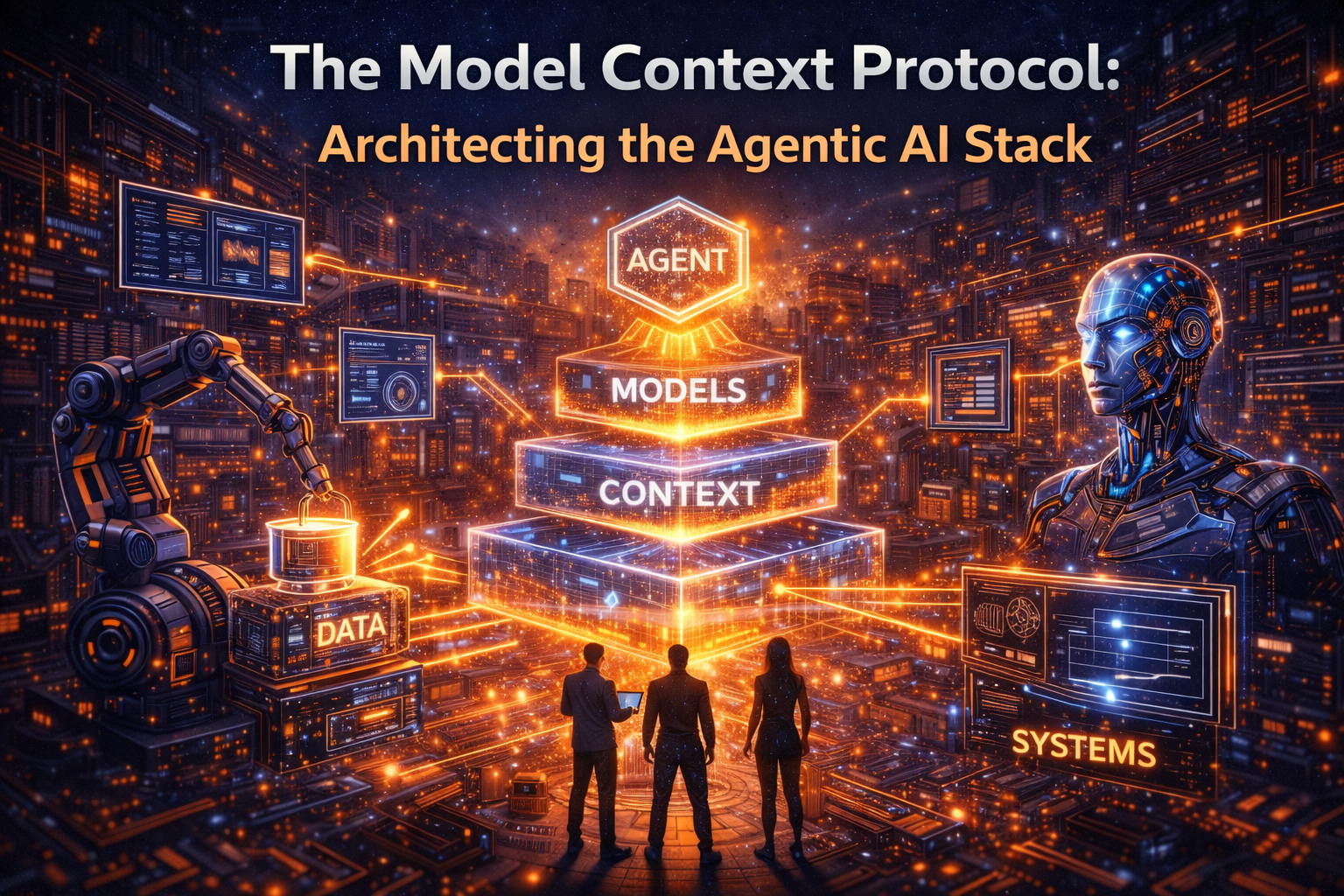

The current enterprise AI landscape is defined by a critical paradox: while Foundation Models (FMs) demonstrate unprecedented reasoning and generative capabilities, scaling these capabilities into reliable, integrated production workflows remains challenging. This “execution gap” between isolated proof-of-concept demos and scalable enterprise infrastructure is the central problem facing technology leadership today. The solution is not merely iterating on model size—though new models like GPT-5.3-Codex and Claude Opus 4.6 (with its one-million token context window) are powerful—but architecting a robust infrastructure layer capable of coordinating autonomous action.
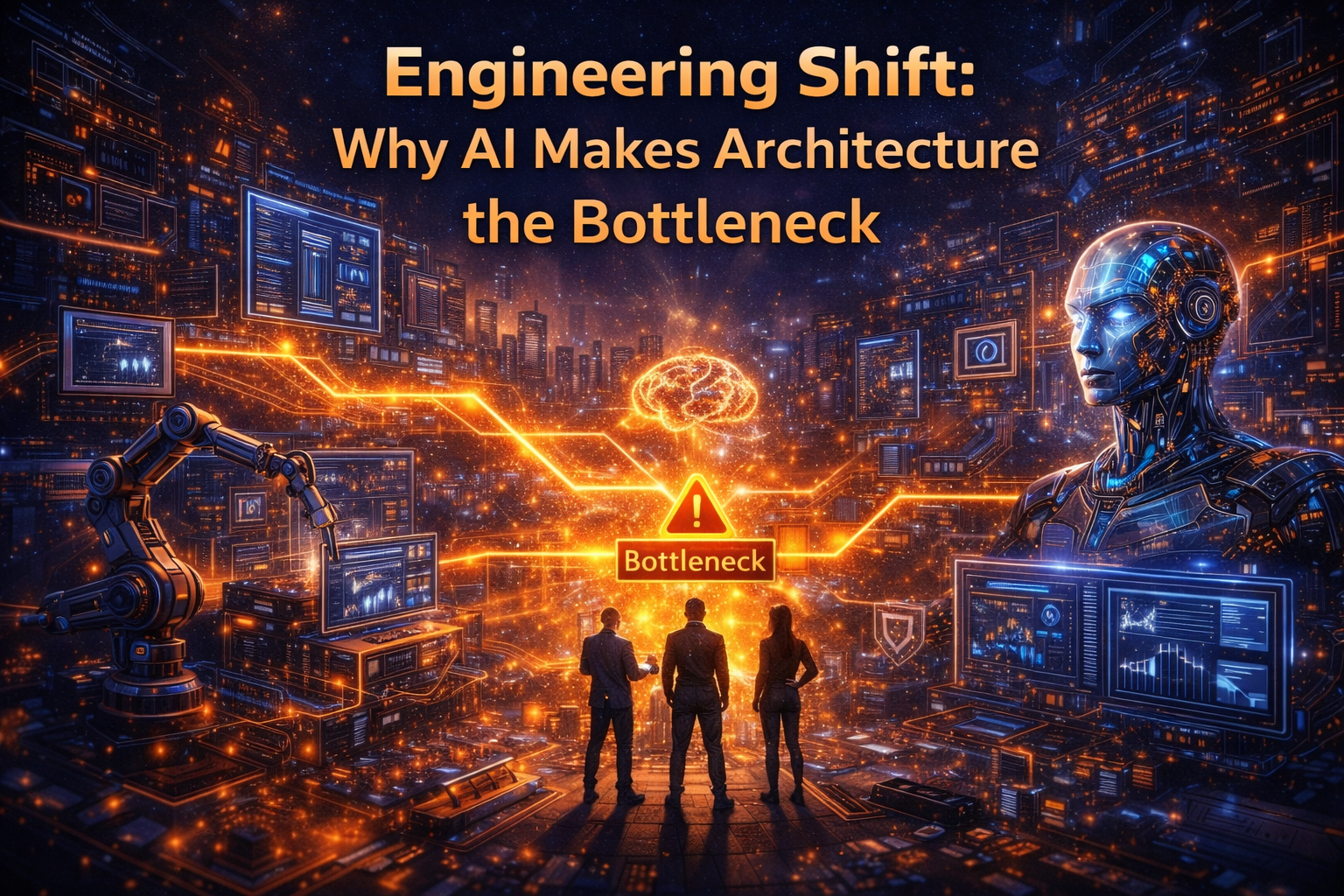
The fundamental shift underway is the prioritization of infrastructure and tooling over singular model capabilities. The technical thesis of this article is that the Agentic AI approach, standardized by the Model Context Protocol (MCP), provides the necessary architectural mechanism for deploying and controlling sophisticated model power reliably in production, fundamentally changing the division of labor in technology teams. This development is immediately critical because the speed of AI-assisted “vibe coding” development is outpacing human auditing capacity, creating security debt that requires immediate rigorous supply chain auditing, and new AI workloads are generating massive cloud costs that demand real-time FinOps implementation to control spending.
TECHNICAL DEEP DIVE: THE MODEL CONTEXT PROTOCOL (MCP)
The Model Context Protocol (MCP) is not a feature; it is a foundational architectural standard addressing how conversational AI agents securely and functionally interact with enterprise tools. Historically, AI systems attempting multi-step tasks relied on fragile methods like external APIs with minimal context or, worse, screen simulation and visual programming to interact with applications. The MCP standard eradicates this reliance on external simulation.
Under the hood, MCP standardizes how productivity tools and enterprise applications—such as Asana, Figma, and Box—expose their functional User Interfaces (UIs) directly within the AI environment. This integration is not just about data retrieval; it allows the AI agent to perceive, utilize, and manipulate these tools as functional components embedded directly into its operational workspace. This reliable, secure mechanism is what enables true Intent-Driven Execution.
Intent-driven agents are digital coworkers that receive a high-level goal, such as “Migrate this legacy database to cloud-native.” The agent then autonomously plans the necessary steps, selects and orchestrates the appropriate integrated tools, and executes the complex, multi-step task sequence. Human approval is factored into the plan but is only strictly required at critical junctures, such as financial commits or high-risk system changes.
This autonomous execution necessitates a new control layer: Agentic Operating Systems (AOS). The AOS is the critical infrastructure component required for widespread adoption. Its mandate is to manage agent swarms, allocate resources, schedule multi-agent workflows, and, crucially, enforce organizational safety rules and governance constraints across all executing agents. The Agentic stack thereby manages the complexity and risks associated with decentralized, autonomous actors accessing internal systems via tools like OpenClaw and Moltbook. This architectural focus supports the broader industry shift away from chasing incrementally larger Foundation Models toward refining smaller, domain-specific models and applying advanced post-training techniques like reinforcement learning to ensure specialization and efficiency for targeted complex tasks.
PRACTICAL IMPLICATIONS FOR ENGINEERING TEAMS
The adoption of the MCP and the Agentic AI stack requires immediate, fundamental shifts in how technology teams operate and manage their systems.
SYSTEM ARCHITECTURE
Software engineers must transition their focus from building traditional applications based on fixed, procedural logic to designing adaptive systems. Future applications must be architected specifically to integrate continuous learning loops and leverage conversational or intent-driven interfaces. Systems must be designed around orchestration primitives rather than static APIs, treating the AI agent as a primary, persistent system user that requires stable, context-aware functional UIs exposed via MCP.
FINANCIAL OPERATIONS (FINOPS)
The new AI workloads consume massive cloud resources, often leading to non-linear and unpredictable spending patterns. Organizations currently lacking real-time visibility into these AI cloud costs face overspends that can reach 50 percent. Tech Leads must immediately implement rigorous, real-time FinOps solutions capable of dynamically monitoring and controlling AI resource consumption. This visibility is not optional; it is essential to ensuring a measurable return on the significant investment in agentic infrastructure.
SECURITY AND GOVERNANCE
The integration of autonomous agents into internal systems via tools mandates an urgent security overhaul. Security teams must address identity management for these non-human actors immediately. This includes establishing robust governance frameworks where reliability, auditability, and clear liability trails are core architectural requirements. Every action taken by an AI agent (e.g., code deployment, data migration) must be auditable, necessitating changes in logging and telemetry infrastructure. Furthermore, to combat “vibe coding” technical debt—where rapid, AI-generated development outpaces human review—engineering roadmaps must include rigorous supply chain auditing and vulnerability scanning for all AI-generated logic before integration into production environments.
CRITICAL ANALYSIS: BENEFITS VS LIMITATIONS
The Agentic AI architecture centered on the Model Context Protocol offers transformative benefits, but its current maturity also presents significant trade-offs and limitations that must be managed by senior technical leadership.
BENEFITS
- Execution Gap Closure: The most significant benefit is moving AI from isolated demonstrations to integrated, reliable, and scalable enterprise infrastructure, directly addressing the execution gap.
- Task Autonomy and Scale: It enables true autonomous, multi-step task execution, allowing engineering teams to offload high-level, complex goals to digital coworkers, freeing human capital for creative and strategic tasks.
- Efficiency: The architectural shift supports specializing smaller, domain-specific models, leading to greater inference efficiency and reduced long-term operational costs compared to continuously relying on ever-larger, generalist Foundation Models.
- Reliable Tool Integration: MCP provides a secure and reliable integration pathway, eliminating the fragility and security risks associated with screen scraping or brittle, uncontextualized API calls.
LIMITATIONS AND TRADE-OFFS
- Infrastructure Overhead: Implementing this architecture requires significant investment in new, specialized infrastructure components, including developing and maintaining Agentic Operating Systems (AOS) to control agent swarms and developing robust MCP connectors for internal toolsets.
- Governance Complexity: The need for non-human identity management, auditability trails, and governance frameworks creates substantial, non-negotiable security overhead that must be addressed immediately, often requiring expertise teams do not yet possess.
- FinOps Risk: Without immediate, dedicated FinOps controls, the potential for massive, unpredictable cloud overspends (up to 50 percent) is a high-liability risk that threatens the measurable ROI of the entire initiative.
- Maturity and Vendor Ecosystem: While the standard is gaining traction, the ecosystem of standardized MCP connectors and mature AOS implementations is nascent compared to established enterprise technology stacks, potentially introducing vendor risk or requiring bespoke internal development.
CONCLUSION
The architecture defined by the Model Context Protocol marks a definitive, foundational shift, moving the focus of AI development from generating content to executing intent. By prioritizing infrastructure that allows reliable tool interaction and orchestrated execution, the Agentic AI stack redefines the division of labor in technology teams. The competition is no longer solely about who has the largest model; it is about who can reliably deploy and govern specialized models to autonomously achieve complex enterprise goals.
Over the next 6 to 12 months, the strategic focus for Senior Software Engineers and Tech Leads must transition entirely to operationalizing this shift. This involves aggressively implementing real-time FinOps visibility, establishing robust non-human identity management, and re-architecting systems for adaptive, intent-driven interfaces. The trajectory is clear: the technology capable of deploying autonomous digital coworkers is here, and the success of an organization will be determined by its ability to prioritize agent orchestration, governance, and auditability as core requirements of its technology roadmap.
🚀 Join the Community & Stay Connected
If you found this article helpful and want more deep dives on AI, software engineering, automation, and future tech, stay connected with me across platforms.
🌐 Websites & Platforms
- Main platform → https://pro.softwareengineer.website/
- Personal hub → https://kaundal.vip
- Blog archive → https://blog.kaundal.vip
🧠 Follow for Tech Insights
- X (Twitter) → https://x.com/k_k_kaundal
- Backup X → https://x.com/k_kumar_kaundal
- LinkedIn → https://www.linkedin.com/in/kaundal/
- Medium → https://medium.com/@kaundal.k.k
📱 Social Media
- Threads → https://www.threads.com/@k.k.kaundal
- Instagram → https://www.instagram.com/k.k.kaundal/
- Facebook Page → https://www.facebook.com/me.kaundal/
- Facebook Profile → https://www.facebook.com/kaundal.k.k/
- Software Engineer Community Group → https://www.facebook.com/groups/me.software.engineer
💡 Support My Work
If you want to support my research, open-source work, and educational content:
- Gumroad → https://kaundalkk.gumroad.com/
- Buy Me a Coffee → https://buymeacoffee.com/kaundalkkz
- Ko-fi → https://ko-fi.com/k_k_kaundal
- Patreon → https://www.patreon.com/c/KaundalVIP
- GitHub Sponsor → https://github.com/k-kaundal
⭐ Tip: The best way to stay updated is to bookmark the main site and follow on LinkedIn or X — that’s where new releases and community updates appear first.
Thanks for reading and being part of this growing tech community!
Leave a Comment